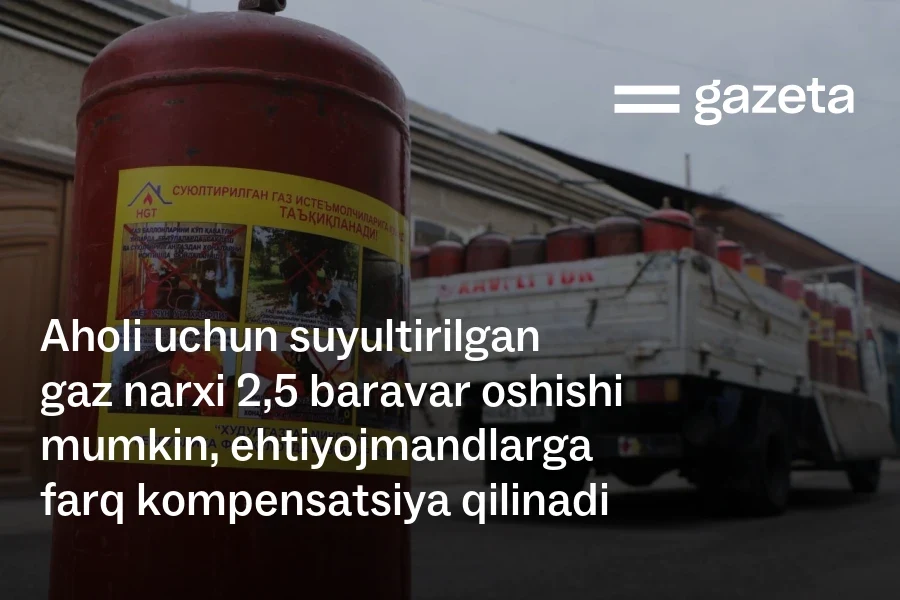
The Ministry of Economy and Finance has proposed raising the retail price of liquefied gas for households from 2,000 to 5,000 soums per kilogram with VAT, plus a capped delivery fee of 1,300 soums. Families in need would receive a 3,000 soum per kilogram compensation for up to 20 kg monthly, capped at 60,000 soums. The government cites insufficient supply, declining domestic production, growing imports and rising demand for propane as reasons for the increase.
The government resolution No. 560 of October 12, 2026 amended the administrative regulation for state services on the handover-acceptance of completed construction facilities and issuance of permission for use. Under the resolution, a State Acceptance Commission is formed by the Cabinet of Ministers and a working commission by the customers. Facilities are accepted directly for use based on the processed and approved acts of these commissions. Before the State Acceptance Commission's act is processed, the State Financial Control Inspectorate conducts a mandatory control measurement at the construction site.
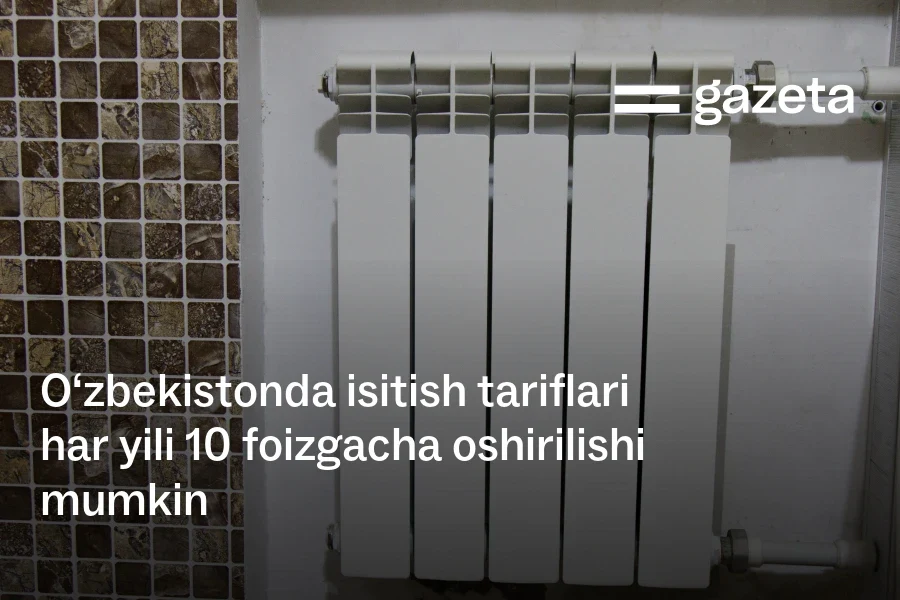
In Uzbekistan, new tariffs for centralized heat supply services for the population have been put forward for public discussion. They may take effect from November 1, 2026. In Tashkent, heating is proposed at 314 soums per day per square meter of heated area (currently 241.44 soums), hot water by meter — 11,607 soums per cubic meter (currently 8,928.67 soums), without a meter — 45,330 soums per month per person, thermal energy — 206,636 soums per 1 Gcal (currently 156,643 soums), and hot water in dormitories with a shared shower — 33,720 soums per month per person. The draft provides for an increase of approximately 30%. From 2028, annual indexation of tariffs is proposed from May 1, taking into account the annual inflation rate but by no more than 10%. Indexation will be carried out based on proposals from the Ministry of Construction and Housing and Communal Services and the Ministry of Economy and Finance, with the goal of gradually bringing tariffs to the level of cost price by 2030. The public discussion will last until October 28.
Uzbekistan plans to restore 3.7 million hectares of pastures by 2027, with 620 thousand hectares to be covered by the end of 2026. Of the country's 21.255 million hectares of pastures, only 40% are used effectively. Plans include drilling 448 wells, repairing 1.6 thousand wells, and building 161 hydraulic structures this year plus 81 each in 2027 and 2028, restoring 969 thousand hectares. 627 thousand hectares will be leased free of charge for 49 years to 470 mahallas, and rights of actual users will be formalized on 623 thousand hectares. 15 livestock complexes for over 55 thousand head of livestock will be built in three regions.
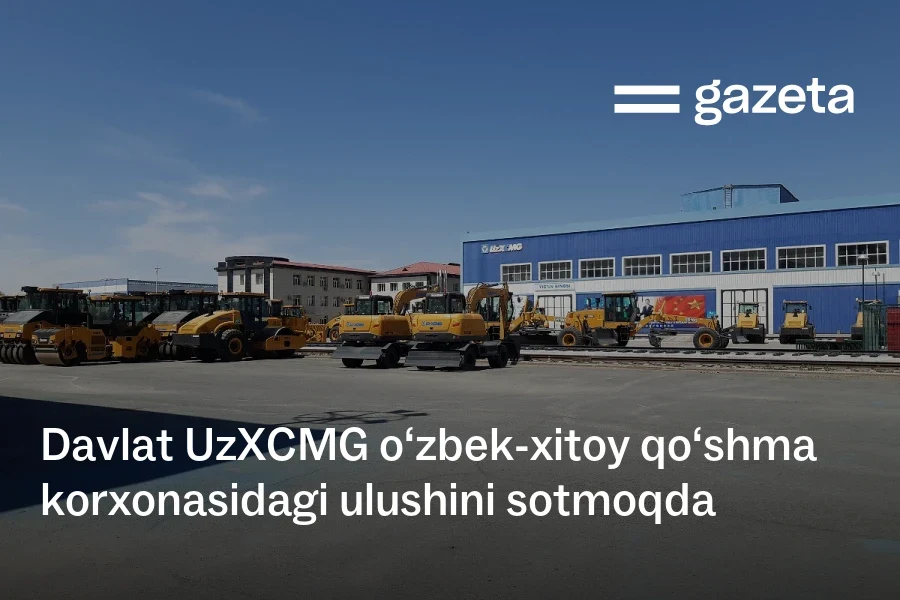
According to e-auction data, the state's 49.07 percent stake in the charter fund of the UzXCMG joint venture in Urgench has been put up for electronic sale. The starting price is 140.53 billion soums, the auction will be held on October 19. The enterprise specializes in manufacturing equipment for the mining industry and underground works, as well as hydraulic excavators and construction equipment. The plant's financial indicators improved in 2025, but in the first quarter of 2026 it again suffered a loss. The sale of the state stake has been planned since 2023.
In Uzbekistan, starting from 2028, centralized heat supply tariffs are proposed to be indexed annually from May 1, taking inflation into account, with the increase capped at 10 percent. From November 1, 2026, heating and hot water tariffs are to be raised separately — in Tashkent by almost 30 percent. The draft also provides for revising heat consumption standards, reducing the cost of heat energy by up to 15 percent, a full technical audit of heat supply systems by the end of 2027, corporate governance reforms at JSC "Issiqlikta'minoti", KPIs, a modern billing system, international financial reporting standards, and a heat supply development strategy until 2030.
In Uzbekistan, heating and hot water supply tariffs for the population are planned to be raised from November 1, 2026, according to a draft government resolution put forward by the Ministry of Construction and Housing and Communal Services. In Tashkent, Veolia Energy Tashkent tariffs are proposed to increase by 30%: heat energy to 203,636 soums per Gcal, heating to 314 soums per day per square meter, and metered hot water to 11,607 soums per cubic meter. The draft also provides for revising tariffs of heat supply enterprises in Karakalpakstan and all regions, with the increase linked to the President's March 11, 2025 resolution and the rise in fuel and energy prices effective June 1, 2026.
In November 2026, it is planned to allocate one-time material assistance of 1 million soums to needy families. It is also proposed to expand the criteria for receiving compensation for electricity and natural gas, and to increase the base consumption norm of electricity in certain regions. This is stated in the draft presidential decree placed for public discussion . According to the draft, assistance will be provided not only to families included in the Social Register, but also to families wh
Uzbekistan has 21 million 255 thousand hectares of pastures, but only 40 percent are used effectively. Khokims must restore 620 thousand hectares this year and 3.7 million hectares next year. Projects in Navoi and Kashkadarya regions, funding from lease revenues, 448 new wells, 323 irrigation facilities, and free 49-year leases of public pastures are planned.
According to the draft, during the 2026/2027 heating season, including November of the current year, a one-time financial assistance of 1 million soums will be allocated to families in need, with funds transferred to citizens' social or bank cards by November 30, 2026. Assistance will go to families in the Social Registry, as well as families meeting income criteria (not exceeding twice the MCE per capita) based on 'mahalla seven' conclusions, families with single elderly and disabled persons, and families with orphaned children. In non-gasified areas, the basic electricity norm will be raised from 200 kWh to 350 kWh. For residents of multi-story buildings with centralized heating, the income criterion is set at twice the MCE in Karakalpakstan and the regions, and three times in Tashkent. Additional lists will prioritize families who lost a breadwinner, families with disabled members, and families caring for disabled children, not exceeding 50 percent of Registry families per district. Compensation periods for electricity and gas will be extended until April 1, 2028, and coal assistance until January 1, 2029. New centralized heating and hot water tariffs are expected from November 1, 2026, with tariffs gradually reaching cost level by 2030, alongside measures to cut thermal energy costs by up to 15 percent and implement 'Billing' software by the end of 2026.
Higher profits at four of the biggest US banks offered fresh signs of economic resilience , as consumers continued repaying their debts and businesses kept investing heavily in AI. But even as JPMorgan Chase, Citigroup, Wells Fargo and Goldman Sachs reported higher profits than a year ago, they warned about the long-term impact of higher interest rates and the pressure rising prices could put on consumers if inflation is not brought under control. JPMorgan Chase, the largest US bank by assets,
The Competition Committee identified violations related to restriction of competition in public procurement worth nearly 10 billion soums across several regions, including Andijan, Fergana, Jizzakh, Namangan, Navoi and Samarkand. Special commissions initiated proceedings against the procuring organizations, instructions were issued to eliminate the violations, and in some cases materials were sent to the relevant authorities for financial penalties and legal assessment.
Greek Finance Minister and Eurogroup President Kyriakos Pierrakakis has announced a 30% increase in the heating allowance. He said: "In a difficult economic climate, with the energy crisis testing the resilience of households across the globe, our priority is to ease the pressure on families. That is why we are proceeding with dual support for heating oil: a direct subsidy at the pump, which will immediately reduce the price, and a 30% increase in the heating allowance compared with last year,
The Tax Committee has put up for public discussion a draft Cabinet of Ministers resolution on digital labeling of vegetable oil. If adopted, mandatory labeling may come into force on July 1, 2027. The requirements will apply to oils under HS codes 1507–1515, including soybean, peanut, olive, palm, sunflower, safflower, cottonseed, coconut and rapeseed oils. Labeling will be done via barcoded stickers on consumer packaging, with producers and traders required to connect to the Asl Belgisi national system operated by CRPT Turon. Selling unlabeled oil will be considered a violation of trade rules. Public discussion runs until October 24.
«Telecom Soft» LLC held an electronic selection for the purchase of video surveillance equipment for automated traffic control systems with an initial price of 10 billion 316 million soums. The Chinese company «HAC Smart Technologies» won with a bid of $657,000 (7.76 billion soums), while «HMN Smart» was recorded as the reserve winner with $698,000 (8.24 billion soums). The «Revizor» channel noted that both companies have their head offices at the same address in Tianjin, China, and their websites are nearly identical, yet the commission found no conflicts of interest. «Telecom Soft» was registered in September 2023 and is majority-owned by «Uzbektelecom» (82.54%).
In Uzbekistan, competition rule violations in government procurement worth about 10 billion soums were identified. The Committee for the Development of Competition and Protection of Consumer Rights found violations in seven organizations across the Andijan, Fergana, Jizzakh, Namangan, Navoi and Samarkand regions, including district road and medical institutions, a boarding school for children with hearing impairments, and forestry. During tenders, the requirements of Article 29 of the Law 'On Competition' were not observed. Cases were opened, mandatory orders issued, and in some cases materials were sent to relevant authorities for possible fines and legal assessment.
The director of the State Assets Management Agency, Sohibjon Murodov, had denied at an October 8 press conference that «Oʻzbekiston pochtasi» was transferred to Wildberries' trust management. However, a corporate document published on October 11 — an excerpt from the minutes of the shareholders' extraordinary general meeting of September 21, 2026 — mentions a trust management agreement dated December 30, 2025, under which WB INT EXPORT LLC, Wildberries' Uzbek branch, acts as trustee of the state's shareholding and holds all shareholder rights. It had also demanded the election of a new supervisory board including its five proposed candidates.
The licenses previously granted to Saneg for the use of oil fields in Uzbekistan have been revoked because the license conditions were not fulfilled and the fields were not put into operation, said State Assets Management Agency director Sohibjon Murodov. He explained that the fields themselves were not privatized — only subsoil-use licenses were granted — and noted that the right to issue hydrocarbon licenses has been moved to auctions since 2023–2024. Saneg's website says the company holds rights to 103 oil and gas fields. The transfer of over 100 fields from Uzbekneftegaz to Jizzakh Petroleum (Saneg) in 2019 was linked to a $2.68 billion project to boost oil production, but production fell short of targets, and the transfer became an episode in a criminal case against former Uzbekneftegaz chief Bakhodirjon Sidikov, who denies the charges.