The key facts
- Elephant remains enrich soil with ammonia, nitrates and phosphorus, but fresh sites can be toxic to plants.
- Plant and microbial diversity near carcasses stays lower for up to 7.7 years.
- Grasses near remains are more nutritious, attracting antelopes and wildebeest that graze there about three times more.
According to Naked Science, the study was conducted by an international team led by Deron Burkepile, a scientist at the University of California, Santa Barbara. The scientific work was published in the journal Proceedings of the National Academy of Sciences published.
While alive, elephants transform the savanna landscape by eating large amounts of vegetation, breaking branches, and sometimes knocking down trees. Scientists studied how long their impact on the ecosystem persists after their death.
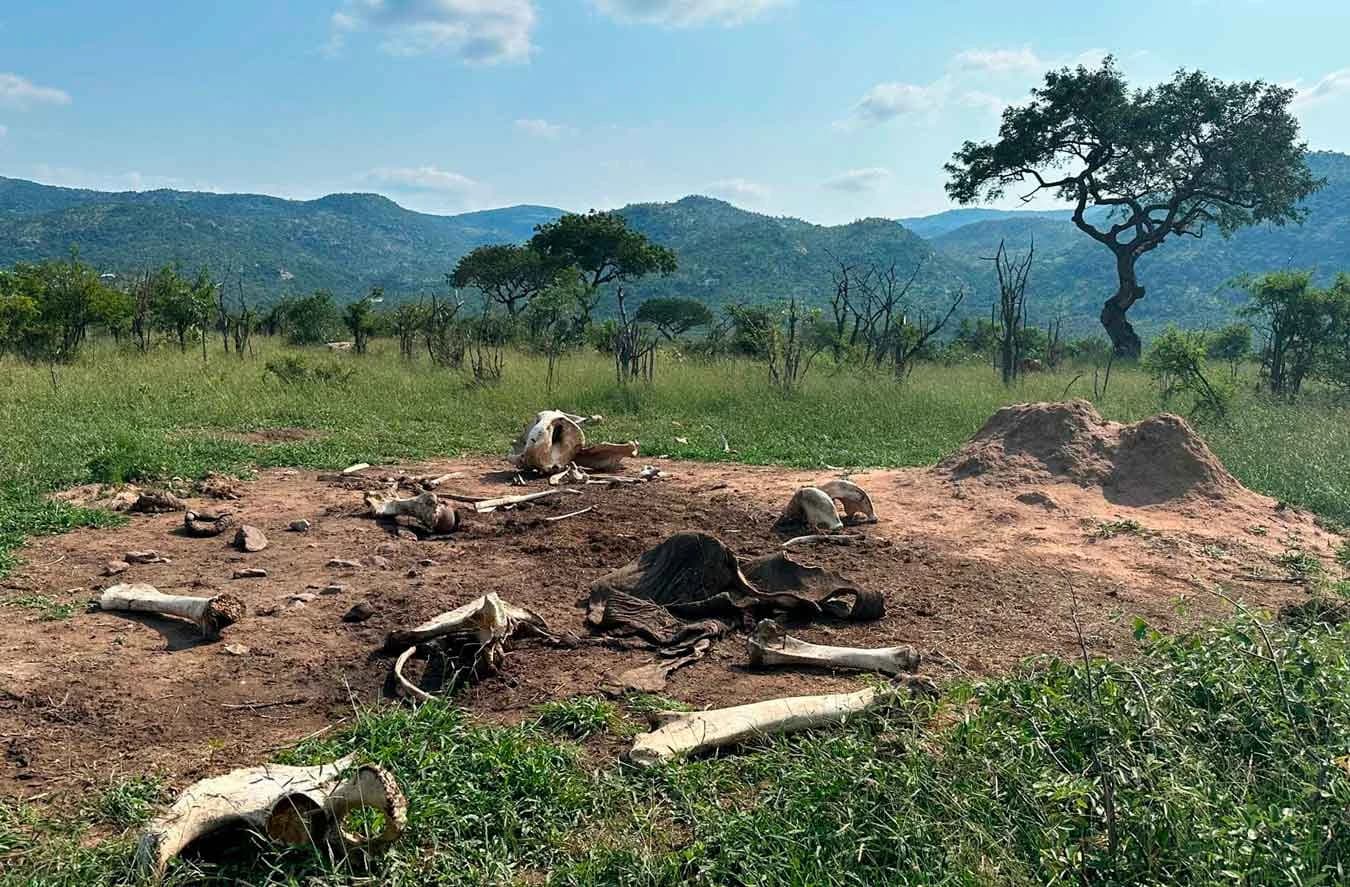
The researchers examined 40 sites where elephants had died. The age of the remains ranged from eight days to 2,814 days, that is, nearly 7.7 years.
At each site, soil and plants at distances of 0.5 and 2.5 meters from the elephant remains were studied. The results were compared with control plots located 15 meters away. In addition, microbial DNA was analyzed, and the animals' feeding was monitored using camera traps.
The greatest changes were recorded in the chemical composition of the soil. Near the elephant remains, ammonia levels were on average 31 times higher than in the control plots, nitrates seven times higher, and phosphorus three times higher.
Near some fresh remains, the amount of nitrogen compounds in the soil rose to nearly 3,000 times the typical level. This was explained by large volumes of organic matter entering the soil as the multi-ton animal body decomposed.
However, the abundance of nutrients did not always benefit plants. Extremely high concentrations of ammonia can be toxic to them. For this reason, unfavorable conditions for plant growth developed around fresh remains.
Plant diversity near the elephant remains was significantly lower than in the control plots. This difference persisted even around remains that were 7.7 years old.
The diversity of bacteria and fungi in the soil also declined. At the same time, the activity of microorganisms that decompose organic matter remained high for one to two years.
Interestingly, the grasses that managed to grow in such places were more nutritious. The nitrogen content in their leaves was on average 1.5 times higher than in the control plots. This trait was observed even around old remains.
Camera traps showed that impala antelopes and wildebeest grazed near the elephant remains about three times more than in the control plots. Such active grazing continued even more than seven years after the elephant's death.