The key facts
- Greenhouses in Tashkent and five adjacent districts will face a special environmental regime with real-time emission monitoring, including drones.
- Permitted heating sources: natural gas, electricity, geothermal and solar energy, and waste heat from power plants; solid-fuel greenhouses must switch by December 1.
- Subsidies of up to 50 million soums per hectare and loans of up to 3 billion soums for seven years are proposed, plus relocation of greenhouses to Surkhandarya region.
In Tashkent and five adjacent districts, a special environmental regime for greenhouse farms has been proposed.
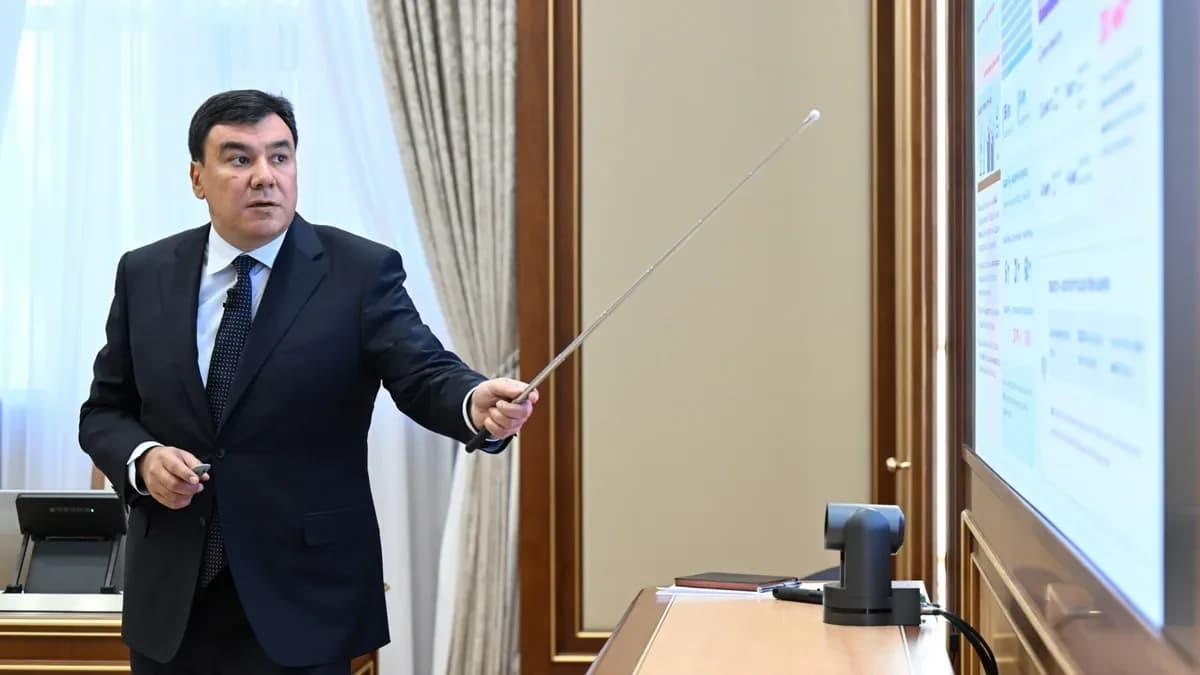
They will be required to use more environmentally friendly energy sources, and emissions will be monitored, including with the help of drones. These measures were considered at a presentation to President Shavkat Mirziyoyev.
According to the presentation, during the autumn-winter period, greenhouse emissions can accumulate in the capital and its surroundings due to weakened winds and temperature inversion. Despite an inventory conducted and support for switching to clean energy sources, some farms continue to use coal.
For heating greenhouses, it is proposed to allow natural gas, electricity, geothermal and solar energy, as well as secondary heat from thermal power plants. Burning tires, plastics, bitumen, fuel oil, used oils and waste is not allowed. Greenhouses operating on solid fuel are proposed to switch to permitted energy sources by December 1.
From October 15, 2026 to March 15, 2027, continuous environmental monitoring of greenhouse farms is planned. The operation of purification equipment, emission volumes and the fuel used will be monitored. Data from measuring instruments and video surveillance cameras are intended to be transmitted in real time to the information system of the National Committee for Ecology. Drones and members of the public will also participate in the monitoring.
In the absence of purification equipment, exceeding emission standards, or using prohibited fuel, enforcement measures are provided, up to suspending the greenhouse's operations.
To modernize farms, it is proposed to allocate subsidies of up to 50 million soums per hectare and preferential loans of up to 3 billion soums for a term of seven years.
A separate block of proposals concerns relocating greenhouse farms to Surkhandarya region. In the Surkhon-Agro free economic zone in the Sherabad district, 940 hectares of land have been allocated. On 400 hectares, greenhouses and agro-logistics facilities are planned to be built, which will be offered to investors as ready-made projects. It is proposed to allocate 220 billion soums for infrastructure development, with another 200 billion soums provided for project financing. In 2027, $100 million in investments is planned to be attracted to the zone.
Responsible officials have been tasked with preparing a digital map showing the location of greenhouses, sources and volumes of energy supply. In addition, measures will be developed to expand sales opportunities for greenhouse products in domestic and foreign markets.