The key facts
- Parts of two colossal pharaoh statues found in Behbet el-Hagar, Egypt
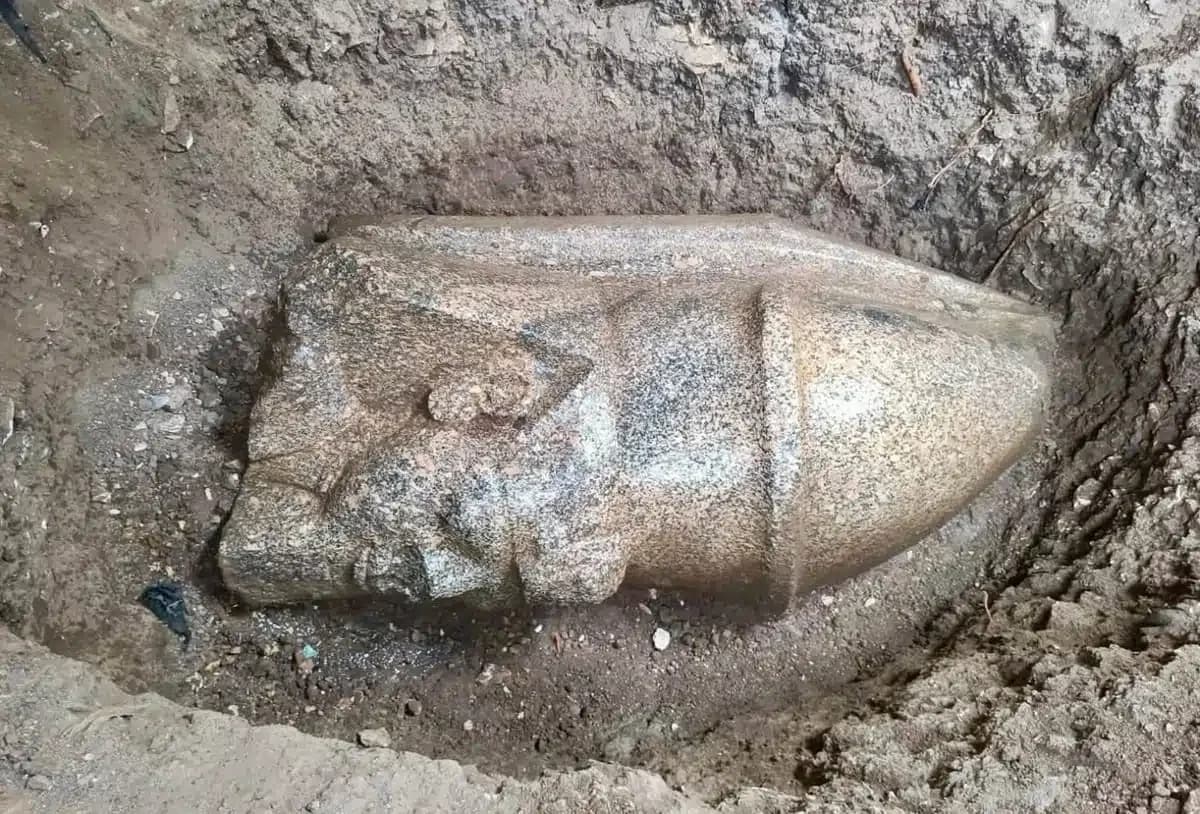
- A 1.6-meter head with a pschent double crown and a 2.4-meter statue fragment were uncovered
- Both statues are believed to depict Ramesses II, who reigned circa 1279–1213 BC
According to Naked Science, citing Heritage Daily, the finds were discovered by an expedition of Egypt's Supreme Council of Antiquities in the settlement of Behbet el-Hagar discovered.
The excavations began after one of the local residents, while working the land near his home, came across a piece of stone bearing inscriptions. He reported it to the antiquities preservation inspectorate.
An initial examination confirmed that the stone was of archaeological significance. A special commission and an excavation team were then sent to the site.
Archaeologists found parts of two colossal pharaoh statues as well as a piece of pink granite inscribed with hieroglyphs associated with Ramesses II.
According to Secretary-General of the Supreme Council Mostafa Hisham El-Leithy, the head of the first statue depicts the double crown known as the "pschent." It combined the white crown of Upper Egypt and the red crown of Lower Egypt, symbolizing the unity of the two lands under the pharaoh's rule.
Part of the back pillar supporting the statue has also survived. It bears an inscription with the Horus name — "Kha-ka-nakht-meri-Maat" — one of the pharaoh's official titles. Such a name emphasized the ruler's connection to the god Horus and his legitimate right to the throne.
The second find is a surviving portion of another pharaoh statue, nearly 2.4 meters tall. Archaeologists believe this statue may also depict Ramesses II.
Its legs and base are missing, but the upper part shows the striped "nemes" headdress characteristic of pharaohs. Although the top of the headdress is partially lost, the statue's head and facial features are quite well preserved.
Ramesses II, also known as Ramesses the Great, was the third pharaoh of Egypt's Nineteenth Dynasty during the New Kingdom period. He reigned from approximately 1279 to 1213 BC. His rule, which lasted more than six decades, was marked by major construction projects, military campaigns, and the building of monumental temples and statues in Egypt and Nubia.