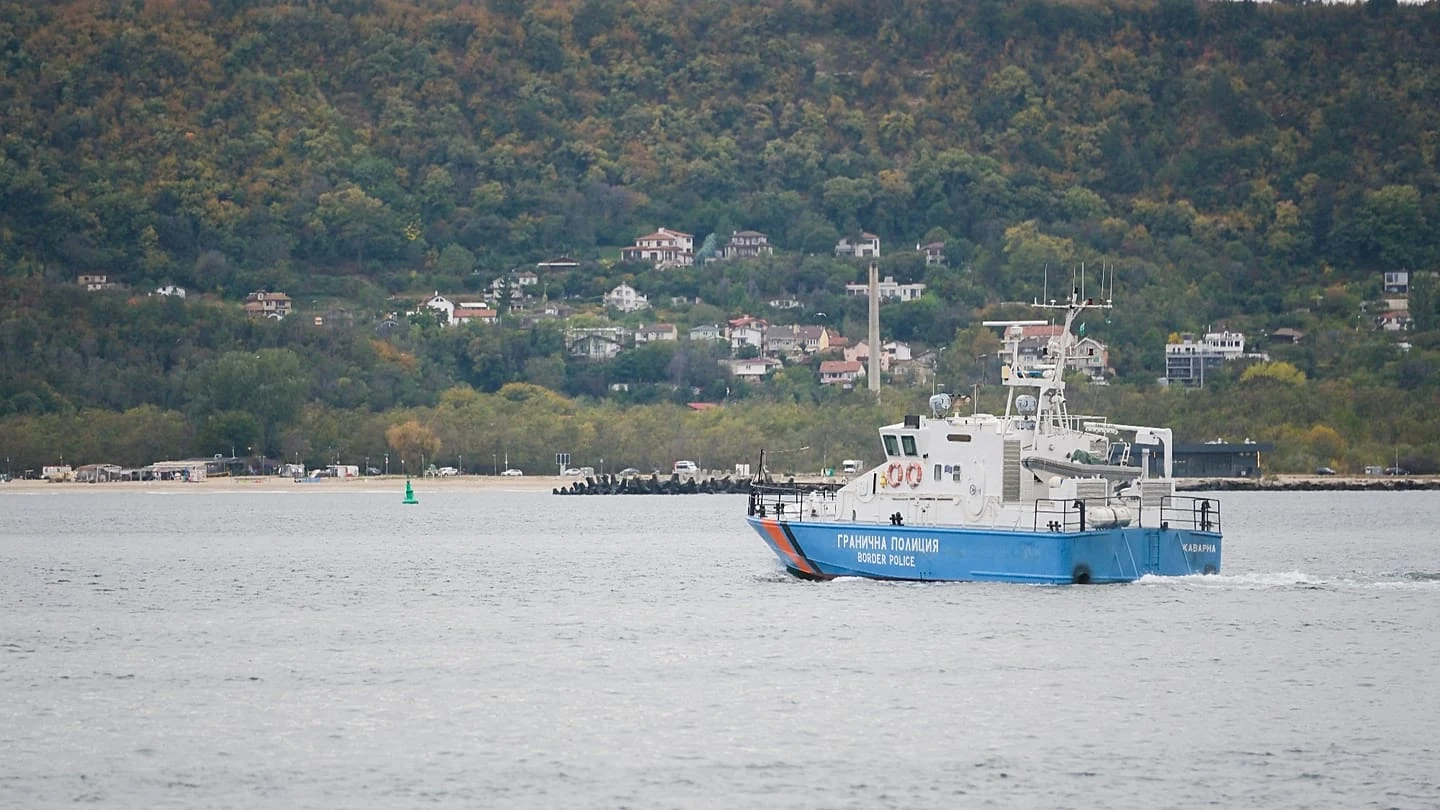
Eleven people are missing after two merchant ships were struck off the Bulgarian coast on Tuesday in the latest spillover from the Ukraine war in the Black Sea.
ADVERTISEMENT ADVERTISEMENTBulgarian Prime Minister Rumen Radev summoned the Russian ambassador after drones struck a Ukrainian-owned cargo ship, while another vessel was also hit and sank further north off the coast of the NATO and EU member.
NATO chief Mark Rutte said the alliance would adjust its defences "as needed."
Radev said the Ukrainian-owned cargo ship Chelsea 3 was "hit by three aerial drones" and shortly afterwards another ship was "struck" and sank.
"We lack solid, clear evidence to level accusations against any specific party; however...logic suggests the outcome works to the advantage of the Russian Federation," he wrote, calling the attack "unacceptable."
The presidency later identified the sunken ship as HS Dignity, a Guinea-Bissau flagged cargo vessel that was en route to the Romanian port of Braila.

It went down 17 nautical miles east of the Bulgarian town of Krapets.
"According to information we got from the rescue centre...five people were rescued and 11 are missing. This is preliminary information," a spokeswoman for the northeastern region of Dobrich told the AFP news agency.
Radev said all 15 crew members aboard the stricken Chelsea 3, seven Ukrainians and eight Azerbaijanis, had been rescued after it was hit 18 nautical miles east of the Bulgarian town of Byala.
'Adjusting deterrence'
Rutte, speaking after a call with Radev, said NATO would continue to work closely "with our allies in the Black Sea."
"We have already strengthened our posture along the eastern flank and will continue to monitor the security environment, adjusting our deterrence and defence posture as needed," Rutte wrote.
EU chief Ursula von der Leyen condemned the latest attacks, calling them "another front of escalation of the Russian war in Ukraine."
Ukraine's Foreign Minister Andrii Sybiha also blamed Russia, denouncing what he called Moscow's "deliberate disregard for civilian lives and maritime security in the Black Sea."
"The Black Sea is a lifeline for global food security. Russia is attacking it to weaponise hunger and hold the world hostage," he posted on X.
Conflict spreads
Amid mounting fallout from Russia's 2022 invasion of Ukraine, drone attacks have become increasingly frequent in neighbouring countries.
The conflict has also spread across the eastern Black Sea, with at least 45 merchant vessels attacked over the past 12 months in areas previously not listed as high risk, the maritime risk management group Ambrey said last month.
No strikes were recorded in the areas in the preceding 12 months, Ambrey said, adding that the increase was driven by attacks further from the coasts of Russia and Ukraine.
Last week, two commercial vessels were hit in the Black Sea off Bulgaria in an attack widely blamed on Russia, though Bulgaria said the circumstances were unclear.
Nine Syrians and one Egyptian remain missing.
That dual strike came a day after another ship caught fire and sank off the Romanian coast, killing one person and leaving another missing.
Ukrainian President Volodymyr Zelenskyy said the ship was hit by Russian drones.
Black Sea security
The incidents have renewed scrutiny of Europe's ability to protect shipping and critical infrastructure in the Black Sea, more than a year after the EU launched a strategy to strengthen security in the region.
When the Black Sea Security Strategy was unveiled in May 2025, EU foreign policy chief Kaja Kallas warned that the region was bearing the spillover effects of Russia's full-scale invasion of Ukraine.
"The Black Sea region is the prime target for hybrid actions. The European Union aims to boost cooperation to combat cyberattacks, disinformation, and other hostile actions," she said.
“Recurring airspace violations and attacks on ports and shipping lanes highlight this reality."

The policy was aimed at ensuring the security of this maritime corridor, as well as protecting critical infrastructure and assets, such as offshore installations and subsea cables.
It also promised the development of a Black Sea Maritime Security Hub aimed at coordinating support and boosting coast-guard cooperation, among other activities.
The hub would also analyse seabed sensor data and alert allies to potential dangers and incoming threats.