The key facts
- Three key tasks for living on Mars: communication, cargo transport, and sustaining human life.
- China's Tianwen-3 mission is planned for launch around 2028, with soil samples returning to Earth around 2031.
- Mars's thin atmosphere, water ice, day length and seasons make it a key stepping stone toward an interplanetary civilization.
According to the publication Naked Science, citing Global Times, a junior researcher at the Shanghai Astronomical Observatory of the Chinese Academy of Sciences set this out in an article titled "Why are we heading to Mars?" stating.
The first task is to ensure information exchange between Earth and Mars. This is important for communicating with spacecraft and precisely determining their trajectory.
According to Zhang, the radio interferometry system developed under the leadership of the Shanghai Astronomical Observatory helps calculate the trajectories of spacecraft heading to Mars with high precision and place them into orbit. This technology was tested during the Tianwen-1 mission.
The second task is to establish the transport of cargo and samples between the two planets. Humanity has learned to send spacecraft to Mars, but there is not yet a practically proven technology for returning materials from there to Earth.
China plans to carry out the Tianwen-3 mission in this direction. It is expected to launch around 2028, with Martian soil samples to be brought back to Earth around 2031.
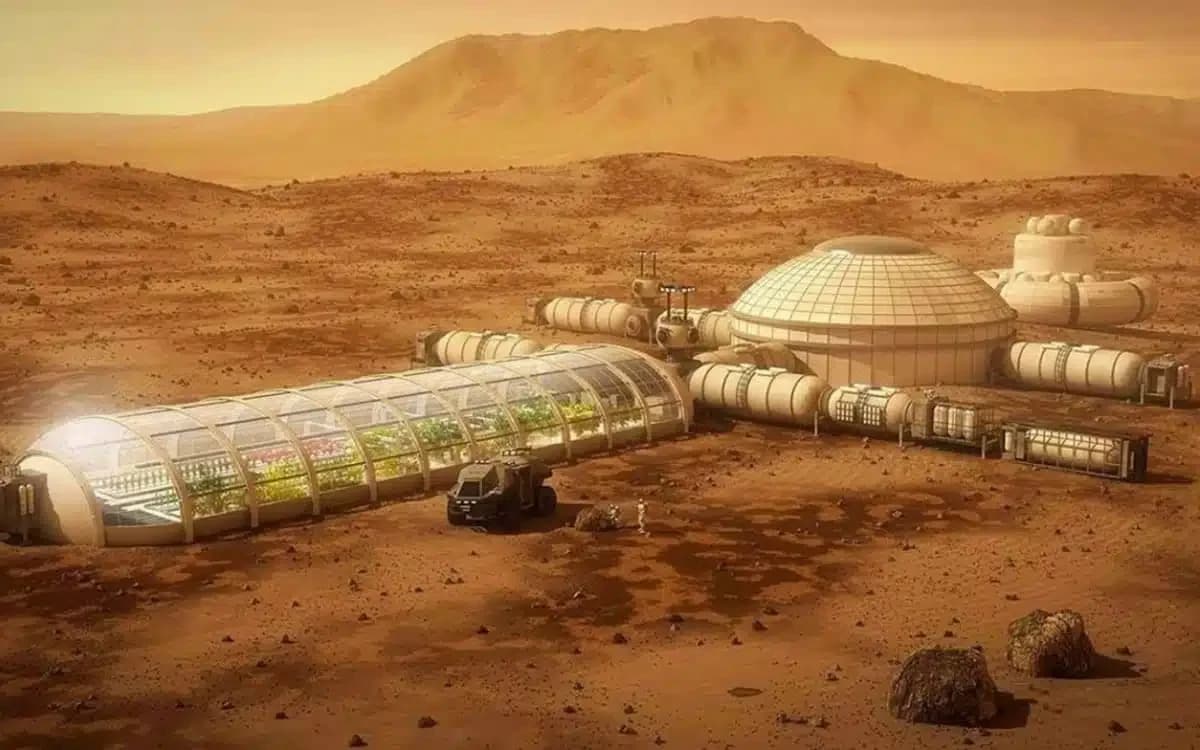
The third task is sustaining human life on Mars. On the Red Planet, temperatures are extremely low, radiation levels are high, gravity is weak, and atmospheric pressure is low. Opportunities to use water and oxygen are also limited.
The scientist emphasized that it is necessary to determine how Mars's local resources can be used for people to live and conduct scientific research there.
Nevertheless, Zhang considers Mars the goal that humanity can achieve in going beyond the Earth–Moon system.
As he explained, Mercury is too close to the Sun, and conditions on Venus are extremely unsuitable for development. Other celestial bodies are located much farther away.
Mars, however, has a thin atmosphere and water ice. The length of a day and the alternation of seasons are similar to those on Earth. According to the researcher, these features could make the Red Planet an important intermediate stage on the way to an interplanetary civilization.